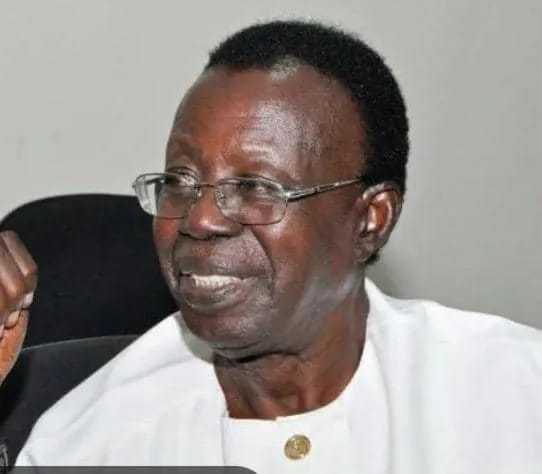
Many Nigerians may never have heard the name Professor Turner Timinipre Isoun, but millions use the products of his vision every day. From making mobile transfers and ordering rides online to attending virtual classes and accessing government services digitally, much of Nigeria’s modern digital ecosystem rests on foundations strengthened during his years in public service.
The former Minister of Science and Technology died on July 15, 2026, in Abuja at the age of 87, bringing to a close a career that spanned academia, public administration and national development.
A distinguished academic
Born on September 2, 1938, in Odi, present-day Bayelsa State, Professor Isoun began his education at Okrika Grammar School and Hope Waddell Training Institute before travelling to the United States to further his studies.
At Michigan State University, he earned a Bachelor of Science degree in 1963, a Doctor of Veterinary Medicine in 1965 and a PhD in 1970. His academic excellence later earned him a professorship in Veterinary Pathology at the University of Ibadan in 1975.
He also served as Special Adviser on Science to the Rivers State Government before becoming Vice Chancellor of the Rivers State University of Science and Technology, now Rivers State University.
The minister who helped shape Nigeria’s digital future
Professor Isoun was appointed Minister of Science and Technology by former President Olusegun Obasanjo in October 2000, serving until 2007.
His tenure came at a defining moment in Nigeria’s history. The country was returning to democratic rule, internet access remained limited, mobile phones were beyond the reach of most Nigerians and the telecommunications sector was still dominated by the state-owned Nigerian Telecommunications Limited (NITEL).
Recognising technology as a driver of national development, Isoun championed policies that would transform the country’s digital landscape.
One of his most enduring achievements was leading the development and implementation of Nigeria’s National Information Technology Policy. The policy paved the way for the establishment of the National Information Technology Development Agency (NITDA) in 2001, an institution that continues to coordinate digital development, ICT innovation and technology adoption across the country.
He also supported the establishment of Galaxy Backbone, designed to provide secure ICT infrastructure and broadband connectivity for government institutions.
Although the liberalisation of Nigeria’s telecommunications sector involved several government agencies, reforms implemented during that era complemented the introduction of GSM operators, making mobile communication available to millions of Nigerians for the first time.
Building a digital economy
The impact of those policies is evident today.
Nigeria has grown from a country where mobile phones were once considered luxury items to one with one of Africa’s largest digital economies. Mobile banking, e-commerce, fintech, online learning, digital healthcare, logistics platforms and ride-hailing services have all flourished on infrastructure and policies introduced during the early years of Nigeria’s ICT expansion.
Professor Isoun also supported initiatives in biotechnology, scientific research and Nigeria’s space ambitions, helping position science and innovation as key components of national development.
A legacy beyond politics
Known for his quiet personality and intellectual depth, Professor Isoun rarely sought public attention despite his far-reaching contributions. He consistently advocated practical scientific solutions, local capacity development and long-term planning over short-term achievements.
He also authored Why Run Before Learning to Walk?, a reflection on Nigeria’s technological development and the importance of building sustainable institutions.
Following his death, Bayelsa State Governor, Douye Diri, described him as an “academic colossus,” saying his contributions to education, science and national development were immeasurable.
While his name may not feature in everyday conversations, Professor Turner Timinipre Isoun’s legacy lives on every time Nigerians make a digital payment, connect to the internet, study online or build businesses powered by technology. His vision helped create an environment where digital innovation could thrive, making him one of the quiet architects of Nigeria’s technological transformation.