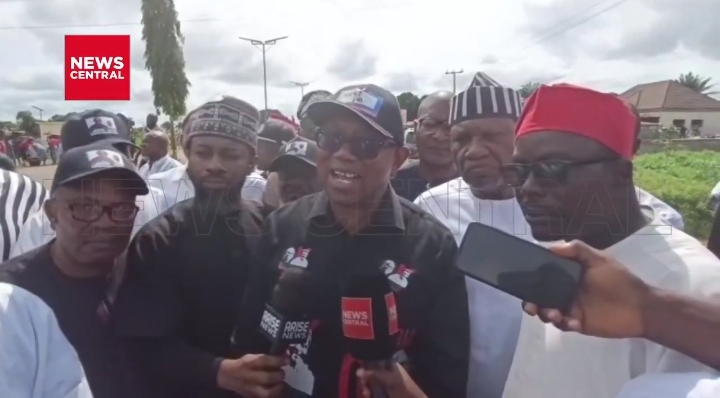
Presidential candidate of the Nigeria Democratic Congress (NDC), Peter Obi, has criticised Nigerian youths attacking the General Overseer of the Redeemed Christian Church of God (RCCG), Pastor Enoch Adeboye, over claims that he has not led protests against President Bola Tinubu.
Obi said it was wrong to transfer political responsibilities to the cleric, warning that such narratives could fuel religious tension and division in the country.
The former Anambra State governor made his position known in a post shared on his 𝕏 handle on Wednesday.
Warning against divisive narratives
Obi said some political actors deliberately exploit sensitive issues when they are unable to compete based on ideas, performance, or vision.
He added that many Nigerians often get drawn into narratives that are designed to create suspicion and disunity among citizens.
“Today, I see similar efforts emerging again, sometimes in more subtle and sophisticated ways. Narratives are planted, amplified, and circulated, often by individuals who genuinely believe they are defending a worthy cause, without recognising the broader agenda behind such campaigns,” he said.
Defence of Adeboye
Obi defended Adeboye, describing him as a respected faith leader who has consistently preached peace, unity, and reconciliation.
He said it was unfair to expect the 84-year-old cleric to take on roles that belong to younger and more politically active citizens.
“At 84 years of age, it would be unfair for young and able-bodied Nigerians to transfer to him responsibilities that properly belong to them,” Obi stated.
Call to young Nigerians
Obi urged young Nigerians to take responsibility for driving national change, saying the task of reforming the country rests largely on their shoulders.
He encouraged them to focus on leadership, civic engagement, and constructive political participation rather than allow themselves to be used for divisive narratives.
The statement comes amid ongoing debates on the role of religious leaders in political discourse and rising public frustration over governance and accountability in Nigeria.