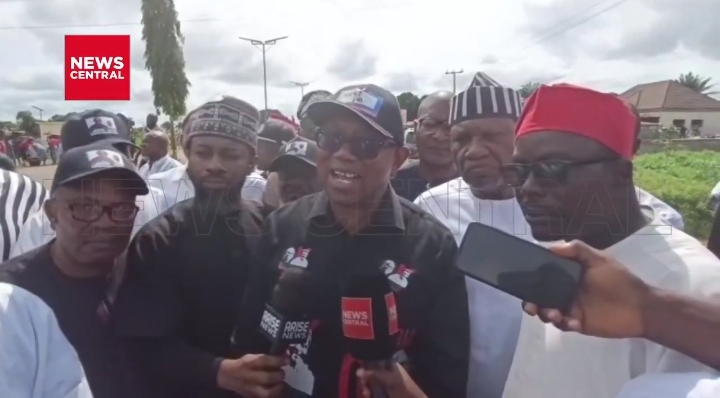
Former Anambra State Governor, Peter Obi, has urged Nigerians to take a more active role in demanding accountability and improved governance, especially in tackling the country’s persistent electricity crisis.
Obi made the call on Monday night while speaking at the Nigeria Democratic Congress (NDC) aspirants dinner held in Abuja.
Obi Highlights Power Generation Gap
During his remarks, the former Anambra State governor drew a comparison between Nigeria’s electricity output and that of South Africa, describing the gap as a reflection of long-standing governance failures.
“Nigeria produces just about 4,000 megawatts while South Africa generates over 40,000 megawatts,” Obi reportedly said at the event.
He stressed that despite Nigeria’s population size and resource base, successive administrations have failed to deliver stable electricity supply.
Call for Long-Term National Thinking
Obi also urged Nigerians to adopt a long-term perspective in national development, insisting that leaders must prioritise the future of younger generations.
He said the country must focus on building systems that will benefit “our children,” rather than short-term political gains.
The event reportedly had in attendance notable figures including singer 2Baba Idibia and Senator Natasha Akpoti-Uduaghan, who interacted with guests at the dinner.
Reactions and Political Undertones
Supporters at the event praised Obi’s consistent advocacy for good governance since the 2023 general elections, describing him as a strong voice for transparency and reform.
However, some critics dismissed the gathering and questioned its political relevance, arguing that it lacked clear structure and substance.
Despite differing opinions, Obi’s message continued to resonate with Nigerians concerned about infrastructure challenges and economic hardship.
Obi has remained active in public discourse since the last election, frequently speaking on governance, economic reforms, and national development priorities.
“I was in South Africa, they have over 40k megawatt of electricity and yet people are complaining they have no power when we have just 4k in Nigeria and we’re not complaining. This is the time for us to come out to complain, what I’m seeing now, I can change it, Those who refuse… pic.twitter.com/eZPiOWVdq8
— Oyindamola🙄 (@dammiedammie35) May 25, 2026