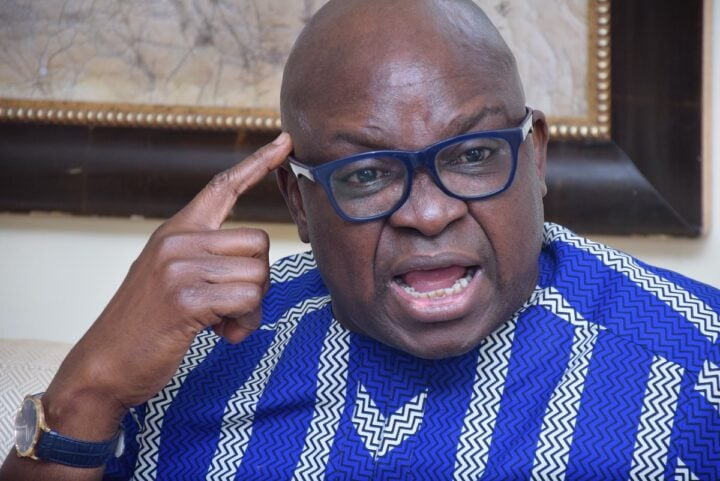
Ayodele Fayose, Chairman of the Rural Electrification Agency (REA) Governing Board, has linked Nigeria’s persistent electricity shortages to population growth, saying early darkness leaves people with fewer options for evening activities.
Fayose made the remarks in a video shared by Arise News on Saturday, August 8, 2026, shortly after his inauguration as REA board chairman.
‘By 7 O’Clock It Gets Dark’
Explaining his argument, Fayose said poor electricity supply forces people to return home early, where some couples may resort to marital intimacy.
“When you don’t address the issue of electricity, by 7 o’clock it gets dark, and people start engaging with their wives, so the population doubles,” he said.
He argued that reliable electricity would encourage nightlife and give Nigerians more opportunities to spend their evenings outside their homes.
“If we address the electricity problem, there will be nightlife,” Fayose added.
Fayose Takes Over REA Board
The comments came a day after Fayose was inaugurated as Chairman of the REA Governing Board in Abuja by the Minister of Power, Joseph Tegbe.
The former Ekiti State governor pledged to expand electricity access, particularly in rural communities, and said the agency should focus on delivering measurable improvements to Nigerians rather than concentrating only on electricity generation figures.
The REA is responsible for promoting rural and off-grid electrification across Nigeria, particularly in communities with limited access to the national grid.
Nigeria’s Power Access Challenge
Nigeria continues to struggle with inadequate electricity generation, transmission and distribution despite having an installed generation capacity of roughly 13,000 to 14,000 megawatts.
Actual supply often falls significantly below installed capacity, leaving millions of Nigerians without reliable electricity, particularly in rural communities.
The power shortage has continued to affect businesses, education, healthcare and household activities, while the government and private sector pursue investments in renewable energy and off-grid solutions.
Fayose’s remarks have generated mixed reactions online, with some Nigerians criticising his explanation as simplistic while others viewed it as a blunt illustration of how unreliable electricity affects everyday life.