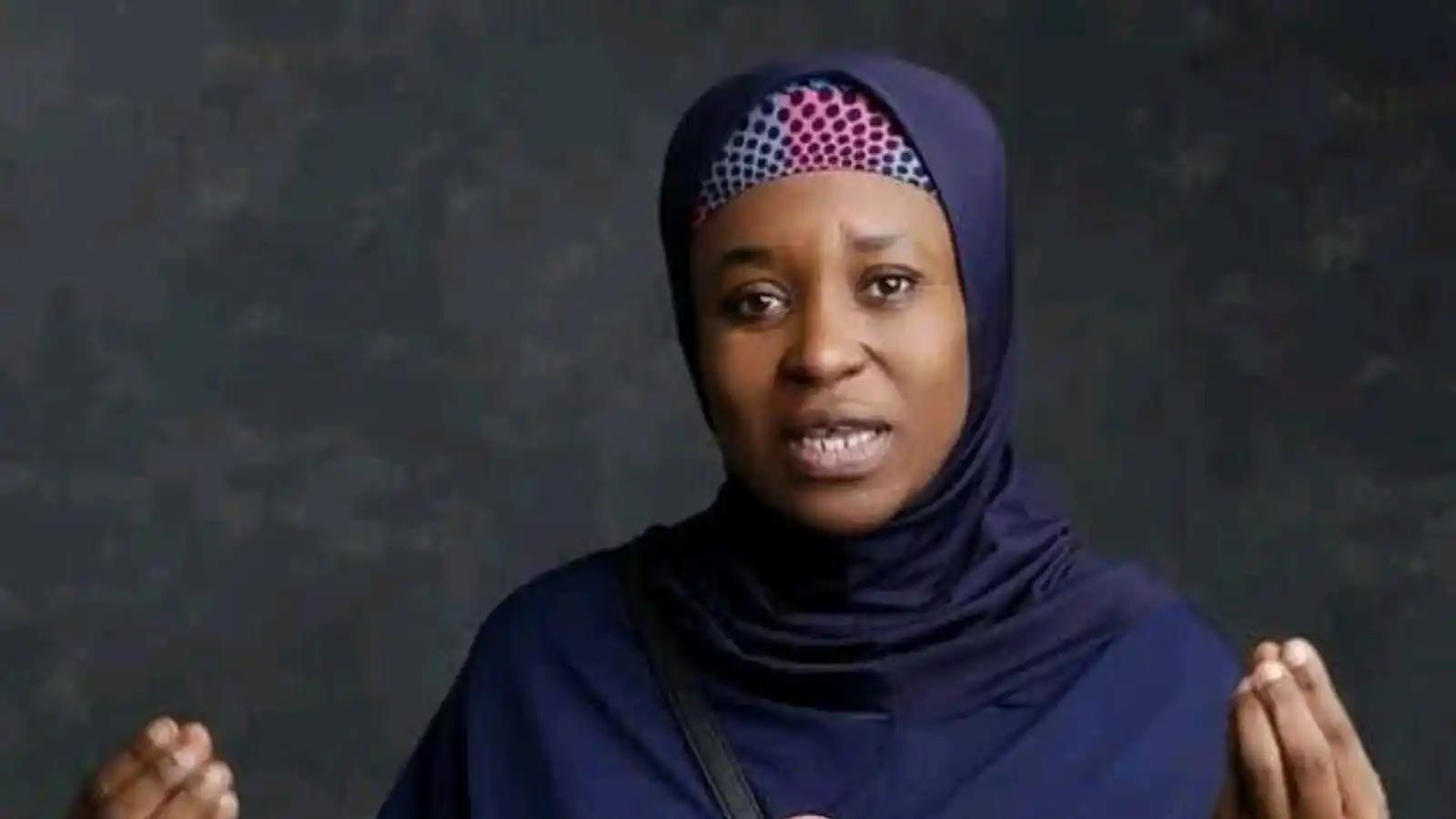
Nigerian activist Aisha Yesufu has renewed her criticism of the relationship between political and religious leadership in Nigeria, arguing that some clerics benefit from the hardship created by poor governance.
Yesufu made the remarks in a resurfaced interview on the Naija Unfiltered programme produced by Symfoni, with a clip circulating widely on X on Friday, August 21, 2026.
Yesufu Describes ‘Symbiotic Relationship’
Speaking during the interview, Yesufu argued that political and religious leaders can benefit from one another when citizens remain dissatisfied with governance.
“There’s a symbiotic relationship between Nigerian political rulers and Nigerian religious rulers,” she said.
According to her, some religious leaders depend on the problems created by poor governance to attract followers seeking spiritual solutions.
“The religious rulers need the political rulers to give bad governance so they can continue to sell cheap miracles,” she added.
Yesufu’s comments were made while she appeared in a studio wearing an orange hijab and speaking into a microphone.
Criticism Extends Across Religions
The activist has made similar arguments in previous public comments, criticising what she describes as the use of religious messages to divert attention from political accountability.
She has argued that political leaders can rely on religious figures to encourage citizens to focus on miracles, the afterlife or spiritual solutions instead of demanding better governance.
Her criticism has extended across Christian, Muslim and traditional religious establishments rather than targeting one faith alone.
Yesufu Renews Criticism of Religious Leaders
Days before the clip resurfaced, Yesufu also criticised religious leaders while responding to comments by Pastor William Kumuyi of Deeper Christian Life Ministry.
Kumuyi had urged Christians not to hate or disdain people in government even when electoral promises are not fulfilled.
Responding to the remarks, Yesufu argued that religious leaders could also contribute to keeping Nigerians politically passive.
She wrote that religious leaders “need bad governance to sell cheap miracles and power points” and called for Nigerians to demand accountability from political and religious authorities.
The latest video has generated mixed reactions online. Some users agreed with Yesufu’s argument that hardship can increase dependence on religious intervention, while others argued that poverty, weak institutions and poor governance are more complex than religious influence alone.
The resurfaced footage does not present a new argument from Yesufu but reinforces her longstanding criticism of the relationship between political power, religious influence and public hardship in Nigeria.