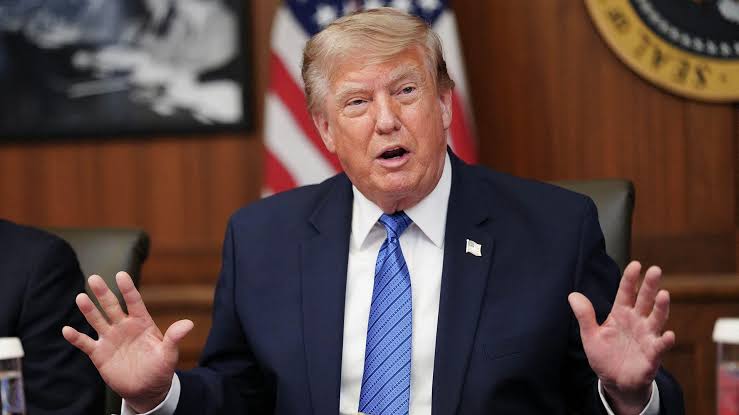
US President Donald Trump has renewed efforts to restrict birthright citizenship for children born in the United States to foreign nationals, including Nigerians who travel to the country to give birth.
The move is part of Trump’s broader immigration crackdown and targets foreigners who enter the US as visitors but allegedly intend to have their children there.
Trump Targets Birth Tourism
Speaking to journalists in the Oval Office, Trump criticised the current system of birthright citizenship.
“They’ve taken birthright citizenship and they’ve made a joke out of it,” he said.
Trump had previously signed an executive order seeking to deny automatic US citizenship to children born to parents who were in the country illegally or on temporary visas.
The order was challenged in court, with lower courts blocking its implementation on grounds that it conflicted with the 14th Amendment.
14th Amendment Protects Birthright Citizenship
The 14th Amendment generally provides US citizenship to people born or naturalised in the United States who are subject to its jurisdiction.
Trump’s earlier attempt to change the policy faced legal challenges, eventually reaching the US Supreme Court, which ruled against his effort in a late-June decision.
“We’re making adjustments because it’s very unfair,” Trump said while defending the latest move.
The constitutional provision, however, does not apply in the same way to certain categories, including children of foreign diplomats who are not subject to US jurisdiction.
US Already Restricts Birth Tourism
US immigration authorities already have powers to deny visas when they determine that an applicant’s primary purpose for travelling to the country is to give birth.
Trump’s latest action seeks to strengthen restrictions around the practice, commonly referred to as birth tourism.
The policy could affect Nigerians and other foreign nationals who travel to the United States for childbirth and expect their children to acquire citizenship at birth.
Part of Wider Immigration Crackdown
The development comes as Trump continues to tighten US immigration policies, including plans to deport millions of undocumented migrants and remove deportation protections from nationals of several countries.
The new restrictions are likely to face further legal challenges, particularly over the constitutional protections surrounding citizenship for people born in the United States.