
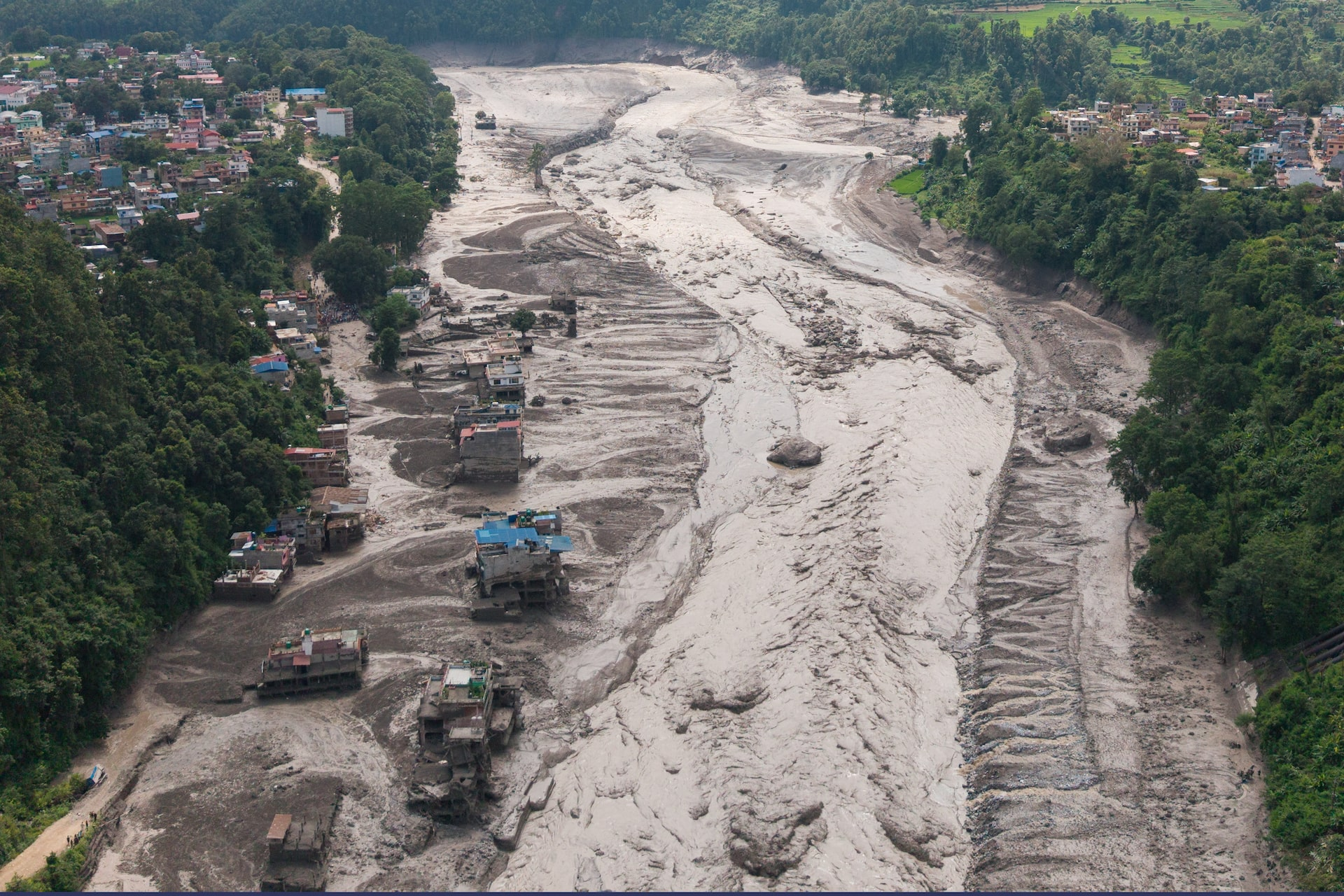
A terrifying video showing people stranded on rooftops as torrents of muddy water and debris sweep through a mountainous area has emerged following the catastrophic floods that hit the Nepal-Tibet border on August 26, 2026.
People Trapped as Floodwaters Surge
The video, shared on X by Nigerian news account @instablog9ja on August 30, shows several people standing on balconies and the rooftop of a multi-storey light-blue building as floodwaters surround the structure.
Mud, rocks and debris can be seen rushing through the area, while nearby buildings appear damaged or destroyed. Corrugated metal sheets, water tanks and other debris are scattered across the flooded landscape.
The footage captures the scale of the disaster as residents seek higher ground while the powerful torrent continues moving through the hilly terrain.
Glacial Collapse Triggered Disaster
The disaster began on August 26 when a large section of glacier and rock collapsed high in the Himalayas, sending a massive surge of water, mud and debris down the Lhende River system.
Early reports suggested that an earthquake had triggered the collapse. The United States Geological Survey later clarified that the seismic signal was generated by the glacial collapse and resulting debris flow, rather than a tectonic earthquake.
The surge travelled through the Lhende Khola and into the Bhote Koshi and Trishuli river systems, devastating communities in Nepal’s Rasuwa district and other areas further downstream. The Tibetan side, particularly Gyirong County and the Gyirong Port area, was also badly affected.
Hundreds Killed, Thousands Missing
The disaster has continued to worsen as rescue teams struggle to reach affected communities. By August 29-30, reports put the combined death toll in Nepal and Tibet at more than 690, with more than 3,000 people reported missing.
At least 19 bridges and about 40 kilometres of roads were destroyed in Nepal, further complicating rescue operations in the mountainous region. Hundreds of foreign nationals, including tourists and pilgrims travelling towards Tibet, are also among those reported missing.
More than 90,000 people are estimated to have been affected, while military teams, helicopters, rescue workers and other emergency personnel continue search and recovery operations.
Rescue Efforts Continue
The difficult terrain, damaged roads and continued risk of flooding have slowed rescue operations. Authorities are also monitoring temporary debris-blocked lakes that could create further flooding if they breach.
The video circulating online offers another glimpse of the disaster’s human impact, showing residents forced onto rooftops as floodwaters and debris transform the surrounding landscape.