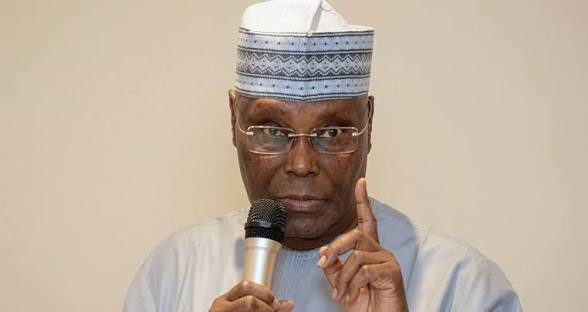
Former Vice President Atiku Abubakar, presidential candidate of the African Democratic Congress (ADC), has restated his pledge to reopen Nigeria’s land borders with Cameroon, Chad, Niger Republic and Benin Republic if elected president in 2027.
Atiku said the border closures had severely affected legitimate traders and businesses in northern states, pushing many young people who depended on cross-border commerce into financial hardship.
Atiku Defends Border Reopening
The former vice president made the remarks in a video clip circulated widely on X on Wednesday, August 27, 2026.
“The Northern states bordering Cameroon, Chad, Niger and Benin Republic have suffered greatly from the closure of these borders. Many young people engaged in legitimate cross-border trade have been pushed into bankruptcy. That is why I said I will reopen the borders,” Atiku said.
The comments form part of his campaign messaging ahead of the 2027 presidential election.
Border Closure Affected Northern Trade
Nigeria shares land borders with Cameroon, Chad, Niger Republic and Benin Republic, with several northern states depending on cross-border trade in agricultural produce, livestock and other goods.
States including Sokoto, Kebbi, Katsina, Jigawa, Yobe, Borno and Adamawa have communities whose economies are closely connected to trade across the borders.
Previous border restrictions, particularly the land border closure introduced under former President Muhammadu Buhari from 2019, disrupted commercial activities and affected the movement of goods and people. The policy was introduced partly to tackle smuggling and protect domestic production.
Further disruptions followed the 2023 military takeover in Niger Republic and subsequent regional sanctions imposed by the Economic Community of West African States (ECOWAS).
Government Has Reopened Some Routes
The Bola Tinubu administration has since reopened some border corridors to encourage trade and ease the movement of goods, including routes linking Nigeria with Niger Republic and Benin Republic.
However, security concerns remain along parts of Nigeria’s northern frontier because of banditry, terrorism and other transnational criminal activities.
Atiku, who previously worked with the Nigeria Customs Service, has consistently supported greater cross-border economic activity and made a similar border-reopening pledge during the 2023 presidential campaign.
Security Concerns Remain
Supporters of the proposal argue that reopening the borders would revive legitimate businesses and restore economic activity in border communities.
Critics, however, have raised concerns that reopening the borders without stronger controls could increase smuggling, arms trafficking and other security risks.
Atiku’s latest position comes as political parties and opposition groups intensify preparations for the 2027 election, with economic hardship, border management and insecurity expected to remain major campaign issues.