Former military President Ibrahim Badamasi Babangida has rejected claims that his administration was corrupt, saying officials during his regime were “saints” compared with the scale of corruption reported in Nigeria today.
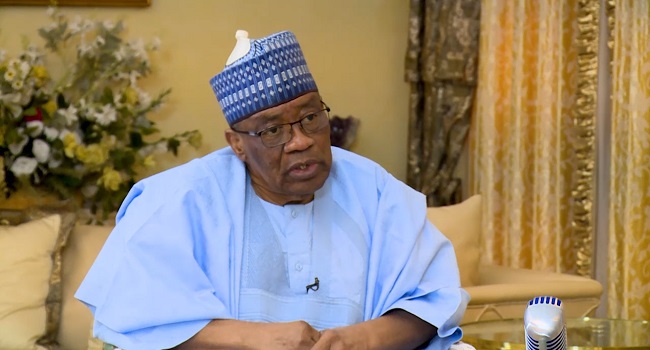
Babangida made the remarks in a resurfaced Nigerian Television Authority (NTA) interview from the “Executive Discourse” series, titled “IBB: Perception of a Corrupt Regime.”
Babangida Defends His Regime
Speaking during the interview, Babangida dismissed the corruption label attached to his administration and pointed to the disciplinary action taken against a military governor over ₦300,000.
“We are not corrupt. I would proudly say it because what I read in the papers, if it is true, then I think I used to say we are saints,” he said.
He added: “I sacked a governor for N300,000. Today, there are N300 billion, still not issued, not solved.”
The roughly 40-second clip shows Babangida, dressed in traditional attire, speaking from a studio and gesturing as he compares corruption cases from his era with those reported in contemporary Nigeria.
Clip Triggers Online Debate
The interview was widely shared on X on August 20, 2026, including by @NigeriaStories, attracting thousands of views and mixed reactions.
Some users argued that ₦300,000 in the 1980s had significantly greater purchasing power than the same nominal amount today because of inflation and the depreciation of the naira.
Others questioned Babangida’s assessment by pointing to longstanding allegations surrounding his administration.
Gulf War Windfall Remains Controversial
Babangida ruled Nigeria as military president from August 1985 to August 1993.
His administration has faced historical scrutiny over the management of an estimated $12.4 billion Gulf War oil windfall. The Okigbo panel, set up after his government, examined the funds and reported that substantial amounts had been spent on projects considered non-beneficial.
Babangida has previously defended the spending, maintaining that the funds were used for infrastructure and economic management.
The resurfaced interview has therefore reopened an old argument about corruption under military rule and how past administrations should be judged against the scale of financial misconduct alleged in present-day Nigeria.