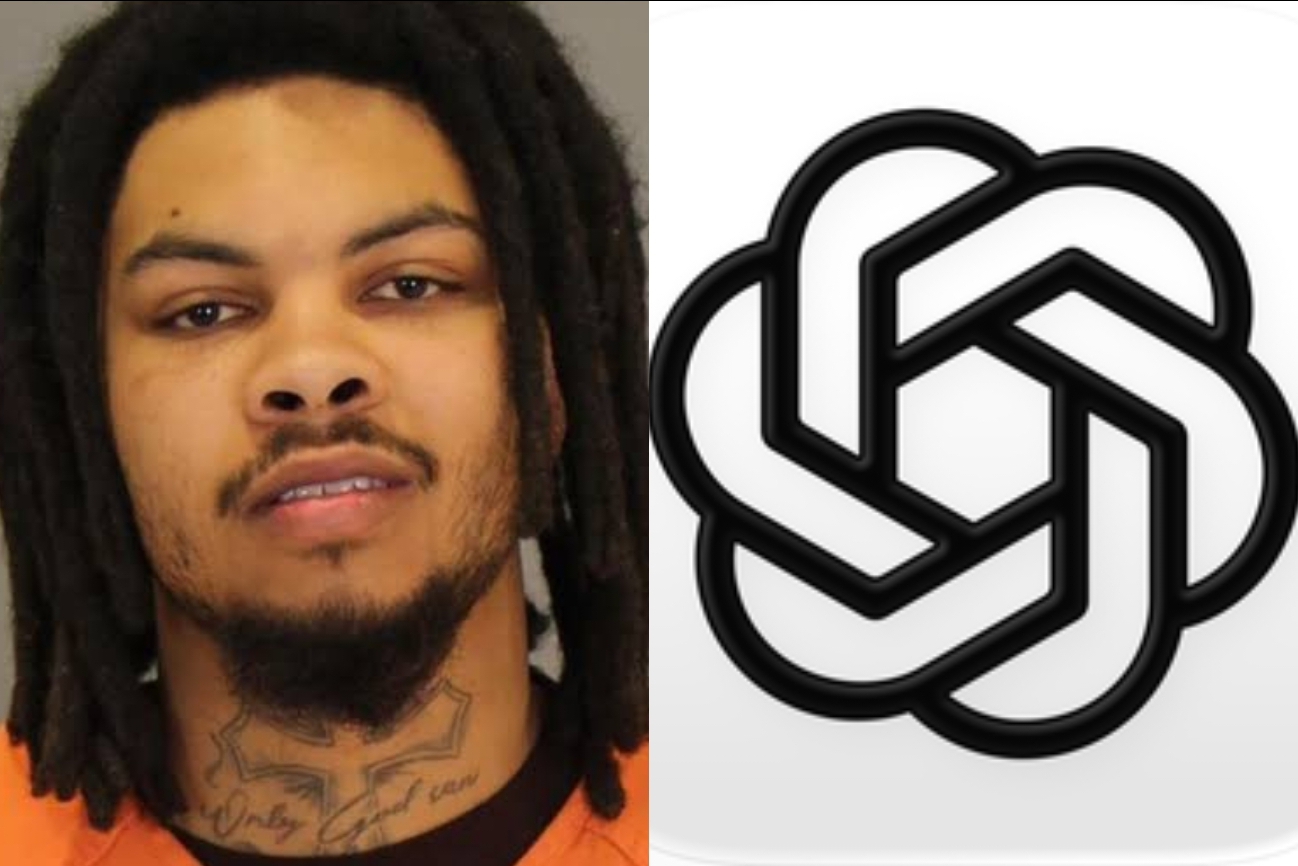
A 23-year-old Omaha, Nebraska, man, Deron Lewis-Payne, has been sentenced to 10 years and one month in federal prison for an armed bank robbery in which investigators found he used ChatGPT to seek information while planning the crime.
Lewis-Payne was sentenced on August 13, 2026, in the U.S. District Court in Omaha after pleading guilty to bank robbery and using, carrying and brandishing a firearm during a crime of violence.
Bank Robbery in Omaha
According to the U.S. Department of Justice, Lewis-Payne entered an i3 Bank branch in northwest Omaha on February 10, 2026, and pointed a semi-automatic handgun at bank employees.
He threatened to kill the tellers if they failed to comply, demanded cash and warned them not to include dye packs in the money. He escaped with about $9,175.
Surveillance footage captured his face because he entered the bank without a disguise. Cameras also recorded his distinctive clothing and getaway vehicle.
Police Trace Suspect
Investigators later found footage of Lewis-Payne spending some of the stolen money at Westroads Mall, where he purchased clothes.
Police eventually located him near one of his residences. He ran when he saw officers and dropped a band of cash.
Although he admitted driving the getaway vehicle, he initially denied taking part in the robbery. Investigators later obtained access to his phone and found digital evidence connecting him to the planning of the crime.
ChatGPT Searches Found
Investigators discovered that Lewis-Payne had used ChatGPT to ask questions about law enforcement response times to bank robberies, repairing and stripping a Llama Mini-Max .45 handgun, and obtaining ammunition despite being a convicted felon.
His Google Maps history also showed that he had searched for directions to the bank shortly before the robbery.
The digital evidence became part of a wider case that included surveillance footage, vehicle information and other evidence used to identify him.
10-Year Federal Sentence
Lewis-Payne received a total sentence of 121 months, consisting of 37 months for the bank robbery and an additional 84 months for brandishing the firearm during the crime.
He will also serve five years of supervised release after leaving prison. Federal prisoners do not have parole.
The case has drawn attention to the use of generative artificial intelligence in criminal activity, while also showing how digital searches, location records and surveillance footage can help investigators trace suspects.